Carbon Accounting
carbon-accounting
Carbon Reduction
carbon-reduction
Climate Policy
climate-policy
4 min. read



This is the second in a series of blogs on the GHG Protocol’s Actions and Market Instruments (AMI) proposal. Read the first blog in the series for an overview of the proposal. This blog examines what the AMI’s proposed framework means for low-carbon fuels accounting, with a specific emphasis on Statement 2 market-based inventory reporting.
Key takeaways
The Greenhouse Gas (GHG) Protocol’s Actions and Market Instruments (AMI) proposal would formally recognize market-based instruments across emissions scopes for the first time, within Statement 2.
The proposal substantially expands opportunities for companies to report lower emissions from purchasing market-based instruments for low-carbon fuels, such as book-and-claim environmental attribute certificates (EACs) for sustainable aviation fuel (SAF) and renewable natural gas (RNG).
Companies purchasing or already holding market-based instruments for SAF, RNG, and other low-carbon fuels should begin mapping those instruments to the AMI’s proposed reporting structure now, before the standard is finalized.
The current reporting problem with low-carbon fuels
A low-carbon fuel (LCF) is defined as a fuel whose lifecycle greenhouse gas (GHG) emissions are lower than those of a relevant, use-case-specific fossil fuel baseline. Most LCFs used today are created from biogenic sources like agricultural residues, used cooking oil, or landfill gas, and their use often results in reduced GHG emissions due to the fact that the CO2 they release during use is biogenic and not fossil.
Consumers of LCFs face a reportability problem. Many buyers track LCF purchases through market-based instruments such as book-and-claim and mass balance environmental attribute certificates (EACs). These instruments unbundle environmental claims from physical molecules to facilitate investment in LCFs when direct provision of the molecule is infeasible. However, the current GHG Protocol only permits the use of market-based tools for electricity-based emissions.
Currently, companies cannot recognize the emissions benefit of an LCF purchase unless they physically receive and combust the fuel. Given that sustainable aviation fuel (SAF), renewable natural gas (RNG), and other LCFs typically flow into shared pipeline and distribution infrastructure rather than being delivered to buyers as distinct physical molecules, direct delivery is often not achievable in practice. This limitation constrains demand growth in the voluntary market.
The value of LCFs to voluntary buyers is the sustainability claim attached to the molecule, not the molecule itself. Without a credible reporting framework for market-based instruments, buyers struggle to justify LCF procurement. Producers, in turn, may face a market where buyer reluctance limits commercial opportunities for scale-up. Non-reportability inhibits one of the few available levers to incentivize voluntary investment in climate solutions.
How the AMI proposal addresses non-reportability
The Actions and Market Instruments (AMI) proposal introduces a four-statement reporting framework, with all four statements relevant to elements of LCFs. Together, these statements give organizations across the LCF value chain a standardized way to account for LCF procurements in their sustainability reports, whether those procurements are physical or through market-based instruments.
Statement 1 covers the physical GHG inventory and is the traditional GHG Protocol inventory as it exists today. Companies that physically receive and combust LCFs recognize the lower GHG emissions here.
Statement 2 proposes a market-based GHG inventory for all emissions scopes. For the first time, this will allow companies to report the carbon intensities of book-and-claim and mass balance EACs for LCFs within a GHG Protocol-aligned inventory. This is a shift from the current framework, which relegates market-based instruments for LCFs and other products, along with carbon credits, to a supplemental section outside of the core emissions inventory. By bringing these purchases into the inventory itself, Statement 2 puts market-based LCF claims on a more equal footing with the emissions companies already report.
Statement 3 covers beyond value chain interventions as well as GHG emissions reductions/avoidance reported relative to a baseline counterfactual (e.g., the domain of carbon credits). Avoided methane emissions upstream from RNG use is one LCF-relevant example that might live here.
Statement 4 captures non-GHG indicators and could include things such as the quantity of an LCF procured or produced. This rounds out the story an organization tells about how LCFs fit within their operations and value chain.
How the AMI proposal applies to specific fuel types
Two important LCFs are impacted by the current GHG Protocol guidance and offer an example of the significance of the AMI proposal.
SAF is a biobased or synthetic drop-in substitute for conventional jet fuel.
RNG, generally produced from organic wastes, is a drop-in substitute for conventional natural gas.
Both are typically delivered through existing infrastructure. SAF is typically blended into a common fuel supply. RNG is often injected into the broader gas network. The buyer typically does not have a direct physical link to the molecule’s consumption, but rather an indirect claim on molecules injected into a common system.
Current GHG Protocol guidance disallows using and reporting market-based LCF emissions factors within corporate scope inventories. If finalized as proposed, the AMI proposal’s Statement 2 would open the aperture for companies to report the lower emissions from purchasing SAF or RNG market-based instruments. Here’s how that might work.
SAF: Reporting across the value chain
When an airline physically receives and burns SAF in its aircraft, the lower combustion emissions are reflected in its Statement 1, scope 1 emissions inventory. This is reported the same way as conventional jet fuel.
The picture changes when airlines use market-based instruments. Many airlines purchase scope 1 SAF certificates that are decoupled from the physical fuel and tracked via book-and-claim or mass balance EACs. Under the AMI proposal, the lower emissions factors of these instrument purchases would be reflected in an airline’s Statement 2, scope 1 emissions inventory.
Corporate buyers face a parallel situation. Companies that purchase scope 3 EACs from SAF suppliers or through airline programs to address employee travel would reflect these lower emissions factors in their Statement 2, scope 3, category 6 emissions. Legitimate Statement 2 claims provide additional incentive for corporate climate action to address travel emissions.
RNG: Reporting across the value chain
As with SAF, an organization that physically receives and combusts RNG can reflect the lower emissions in its Statement 1, scope 1 emissions inventory.
More often, RNG is injected into the shared gas network through book-and-claim or mass balance rather than physical delivery. Statement 2 introduces a reporting opportunity for RNG EAC purchasers to report lower scope 1 emissions. Lower emissions from RNG consumption could also be passed through as reduced scope 3 emissions for consumers of products associated with RNG consumption.
RNG carries an additional nuance. Some RNG projects may also claim to have avoided methane emissions (e.g., dairy manure methane emissions avoided by way of diversion to RNG). This type of methane avoidance attribute, typically tracked in the realm of carbon credits, would have a home within Statement 3, subject to additional disclosure requirements. Companies evaluating RNG certificates should understand which claims belong in which statement.
Application to other LCFs and market-based instruments
While SAF and RNG are two of the more prominent examples, the AMI proposal is relevant to all LCFs including renewable diesel and marine fuels. The emissions associated with market-based instrument purchases for these fuels would belong in Statement 2.
The proposed framework may also cover market-based instruments aimed at lower emissions conventional fuels, e.g., natural gas production that has taken measures to reduce fugitive methane emissions far below industry averages. Companies purchasing certificates of this type would theoretically report reduced emissions in Statement 2, scope 3 category 3.
Three steps companies can take now to prepare
The AMI proposal is still in development, with a public comment period that recently closed, and a draft standard expected in 2027. Companies that act early will be better positioned when the standard takes effect. Steps will vary depending on where in the fuels value chain an organization sits, but could include:
Map exposure. Identify where the organization sits in the LCFs value chain and what fuels it is currently procuring and consuming. This will help to better understand where the largest fuels-related emissions hot spots are in the current GHG inventory.
Record current instruments and assess quality. Catalog the instruments the company is currently producing or procuring. Understand where these instruments may sit within the AMI’s proposed four-statement framework and assess their quality against emerging eligibility criteria.
Engage with the process. The GHG Protocol is still defining eligibility and quality criteria for LCF instruments. Companies with active programs have a real stake in how those criteria are written.
How Carbon Direct can help across the LCF value chain
The AMI proposal has the potential to significantly expand how organizations report on LCF procurement. Companies will need to understand how their existing or planned instruments fit within the proposed framework and what quality looks like in this still-developing space.
Carbon Direct has extensive experience working across the LCF value chain, from airlines and large corporates to fuel producers and developers. Our LCF advisory services include:
LCF procurement and instrument quality: We help buyers understand what existing fuel certification schemes cover, assess instruments against developing AMI eligibility criteria, and identify gaps before committing to a purchase.
Producer market strategy: We help producers navigate the sustainability requirements of buyers and the combined regulatory and voluntary market environment, whether securing offtake, selling physical fuel, or optimizing across carbon accounting and EAC regimes.
AMI reporting readiness: We map your existing LCF instruments and procurement strategies across the AMI's proposed four statements, identifying which purchases belong in Statement 1, 2, or 3 and where gaps exist before the standard takes effect.
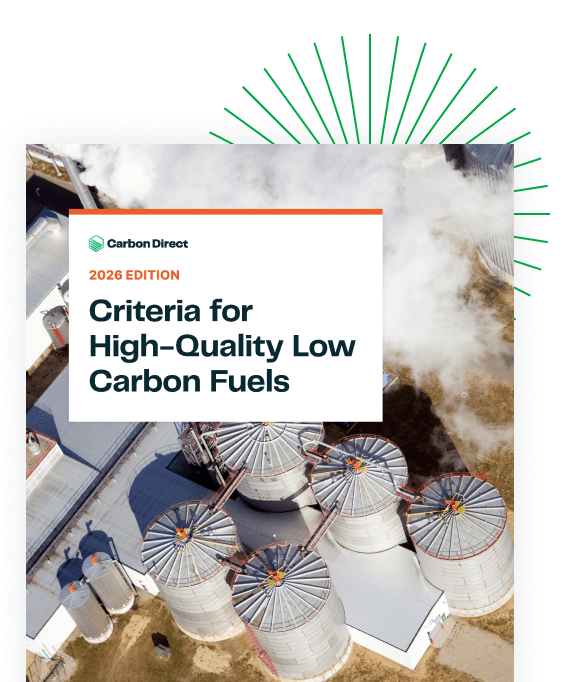
Criteria development: Our team of experts has developed a holistic set of criteria for LCF production and purchases. These criteria aim to support high-integrity claims and minimize reputational risk for LCF procurement.
If your organization is procuring or producing LCFs and wants to understand what the AMI proposal means for your reporting strategy, contact us to get started.